Big Ideas
Machiavelli
For five hundred years “Machiavellian” has meant sneaky and untrustworthy, but the man behind the word was neither. Niccolò Machiavelli spent fourteen years watching popes, dukes, and the families who ran Florence, and he wrote down the patterns honestly: see things as they are, prepare in the calm, mean what you say, know when to be a fox and when to be a lion. We hand a kid those patterns before the insult ever reaches them.
Why we love it
- He is the most misunderstood name in history: a whole insult, “Machiavellian,” got stuck to a man who never earned it, and reclaiming a villain turns out to be thrilling.
- He spent fourteen years in the room while popes schemed and dukes rose and fell, then wrote down what he actually saw instead of what he was supposed to say.
- The real lessons are startlingly clean for a kid: look at things as they are, prepare while it is calm, mean what you say, and don't get forced into picking one kind of strength.
- Our youngest book hands a toddler that two-modes idea through a fox and a lion taking turns through a forest, before the world tells anyone they have to choose one.
Why it matters
The Prince, written in 1513 and published in 1532, is one of the founding texts of modern political thought, the first book to ask plainly how power actually works rather than how it ought to. Its most famous image, that a leader must be both the fox who sees the trap and the lion who frightens the wolves, has been quoted for five hundred years. But Machiavelli was no simple tyrant's tutor: in the Discourses he argued passionately for republics and self-government, and the Florentine Histories made him a serious historian. The word “Machiavellian” became an insult long after his death, flattening a careful observer of power into a cartoon villain. The real man, and the real books, are far more interesting than the slur.
Ages 0–4 · Read TO
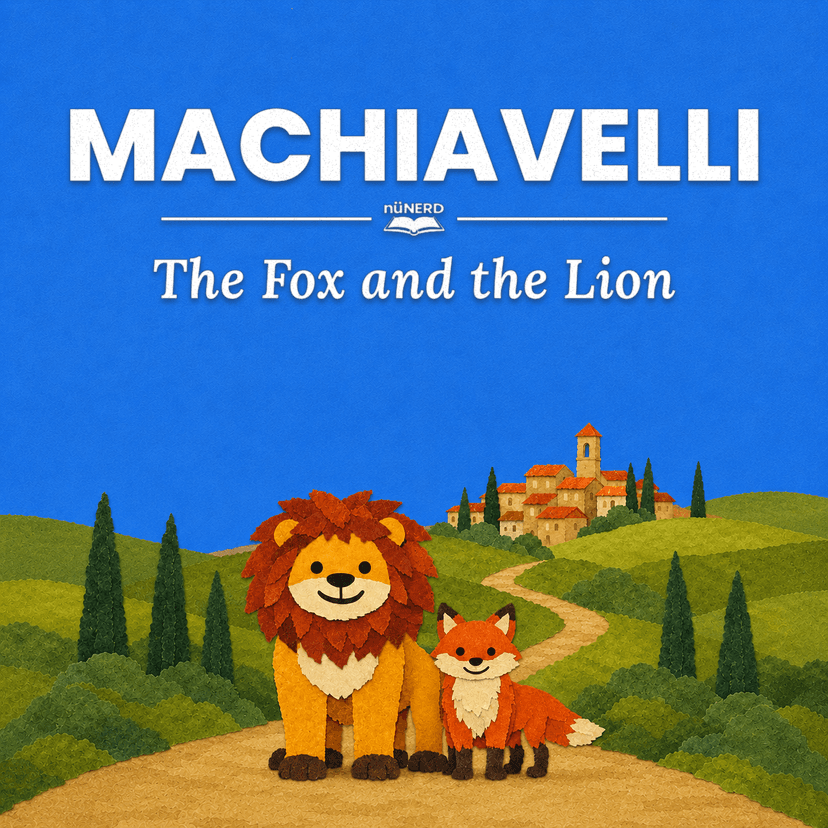
The Fox and the Lion
Picture Book (8.5" × 8.5") · Full Color Cut-Paper Collage
Two animal friends move through a forest together. Fox is clever, she watches, waits, finds another way. Lion is brave, he stands tall, pushes through, roars when the moment demands it. Five hundred years ago, Machiavelli wrote that a real leader carries both. This book hands that idea to a 0-to-4-year-old, before the world tells them they have to pick one.
Buy on Amazon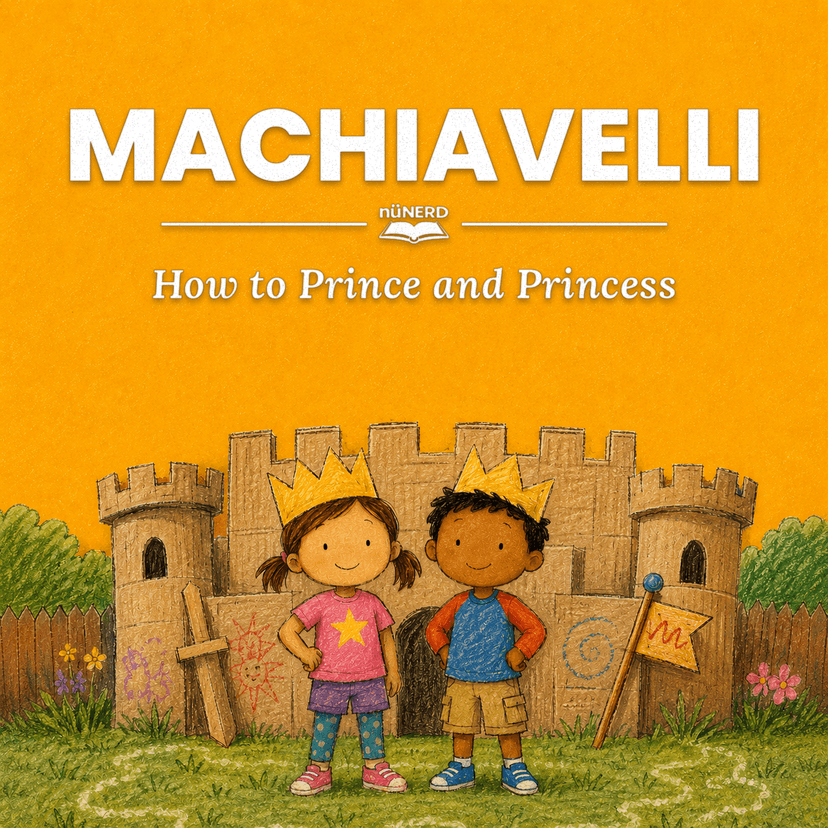
Ages 3–7 · Read WITH
How to Prince and Princess
Picture Book (8.5" × 8.5") · Full Color Soft Crayon
Five hundred years ago, Machiavelli named the six things that separate leaders who last from leaders who fall. This book gives those six practices in rhyme, addressed directly to a three- to seven-year-old as a prince or princess in training. Prepare. Pay attention. Mean what you say. Hold your ground. Be a fox sometimes, a lion others. And know that half of what happens isn’t up to you.
Buy on Amazon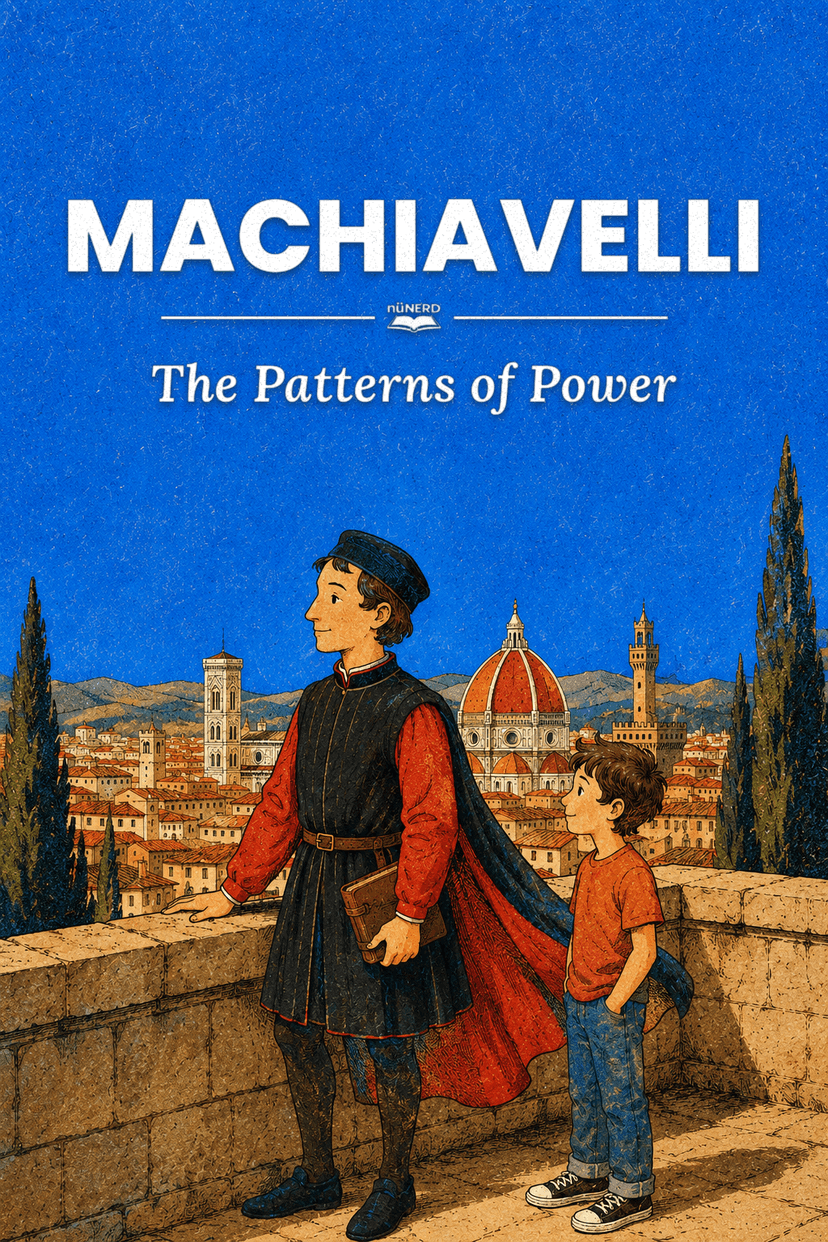
Ages 6–10 · Early Independent
The Patterns of Power
Chapter Book (6" × 9") · Black & White Illustrations
Niccolò Machiavelli spent fourteen years watching power up close, popes, dukes, the Florentine families who ran a city without ever wearing a crown. Then he lost everything, sat down at a small farm by candlelight, and wrote the patterns he’d seen. This book gives a six- to ten-year-old the man, the city, the books, and the patterns of power, before the cultural baggage gets there first.
Buy on AmazonFree resources
Read Machiavelli free
Our books are built to get kids ready for the real thing. When they are, here is the real thing, free: the public-domain text, a volunteer-read audiobook, and background worth a parent’s time.
Watch and explore
- What Machiavellian really means (TED-Ed)
A short animated lesson on where the word came from and why the reputation may not match the man.
Background for parents
- Machiavelli (Stanford Encyclopedia of Philosophy)
The leading scholarly reference on his life, The Prince, and his place in political thought.
- Machiavelli (Internet Encyclopedia of Philosophy)
A peer-reviewed guide to his key ideas, virtu and fortuna, in plainer language than most textbooks.
Go deeper
- The people's prince: Machiavelli was no Machiavellian (Aeon)
A serious essay arguing that The Prince is at heart an argument for government that serves the many.
- Renaissance Humanism (World History Encyclopedia)
Background on the revival of classical learning that shaped the Florence Machiavelli lived in.
Read the source free
- The Prince (Project Gutenberg)
Machiavelli's most famous book, free to read, so you can see exactly what he wrote.
Read more
Why We Made Machiavelli for Kids (at Every Reading Level)
Yes, Machiavelli is worth teaching kids, once you get past the insult his name became. Here is why we made him for children, what “Machiavellian” really means, and what age it is for.
Read the post