Plutarch
Theseus & Romulus
Two young men, born centuries and a sea apart, each took a crowd of quarreling strangers and turned them into a city: one built Athens, one built Rome, and both have outlived their founders by three thousand years. Nineteen hundred years ago Plutarch placed this pair first in his great book, because founding a city is where everything else begins, and then weighed the two lives to ask not what happened but what it revealed about character. We hand a child that exact way of thinking, one reading level at a time, years before a classroom will, and because Plutarch's own verdict on this pair survived, a reader can grade their own judgment against the master's.
Why we love it
- A boy walks alone into a maze built so that no one who goes in ever finds the way out, kills the monster waiting at its center, and walks back into daylight on nothing but a ball of thread a girl pressed into his hand.
- A newborn is thrown into a river to drown and lives only because a wolf comes down to the water and nurses him instead of eating him. That baby grows up to found Rome.
- Here is the part nearly every children's version quietly drops: each founder does something genuinely cruel. Theseus sails home and leaves the girl who saved his life asleep on a beach. Romulus kills his own brother over the first wall of Rome.
- Two boys from opposite ends of the ancient world, handed the same impossible job, and it was never the wall. Turning a mob of quarreling strangers into one people is the real adventure hiding under the monsters.
Why it matters
Theseus and Romulus are the founding heroes of Athens and Rome, the two cities the Western world still traces itself back to. Their stories are the ones civilization tells about its own beginning: a labyrinth and a monster, a she-wolf and a baby in a river, a new wall and the brother killed beside it. Rome counted its years from the day Romulus founded it, and the wolf that saved him is still the symbol of the city today. But what earns this pair a place in a child's hands is the hard thing hiding inside the adventure. Each man built something magnificent and did something cruel to get there, and these books let a child keep the wonder first, then weigh the cost years later: that greatness and goodness are not the same thing, and a wrong always leaves a debt that somebody has to pay.
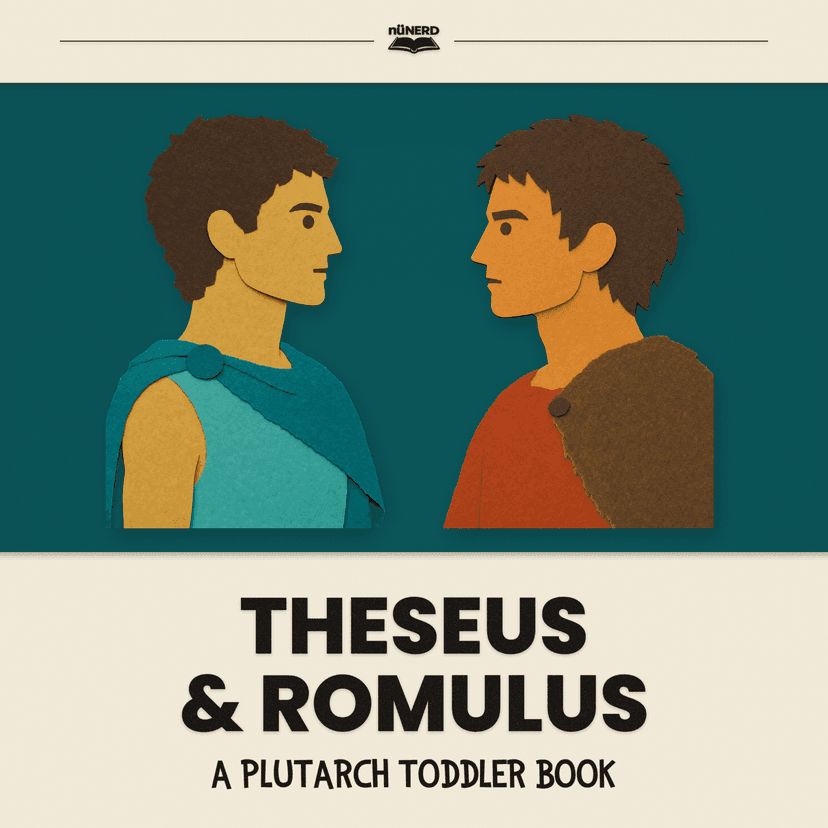
Ages 0–4 · Read TO
A Plutarch Toddler Book
Picture Book (8.5" × 8.5") · Full Color Cut-Paper Collage
A clever boy walks into a maze built so no one could ever walk out, beats the monster at its heart, and finds his way back to the light on a single thread. A baby who should have drowned in a river lives instead, saved by a wolf, and grows up to build Rome. One clever, one brave, a difference a toddler can feel long before anyone hands them a date. A picture on every page.
Buy on Amazon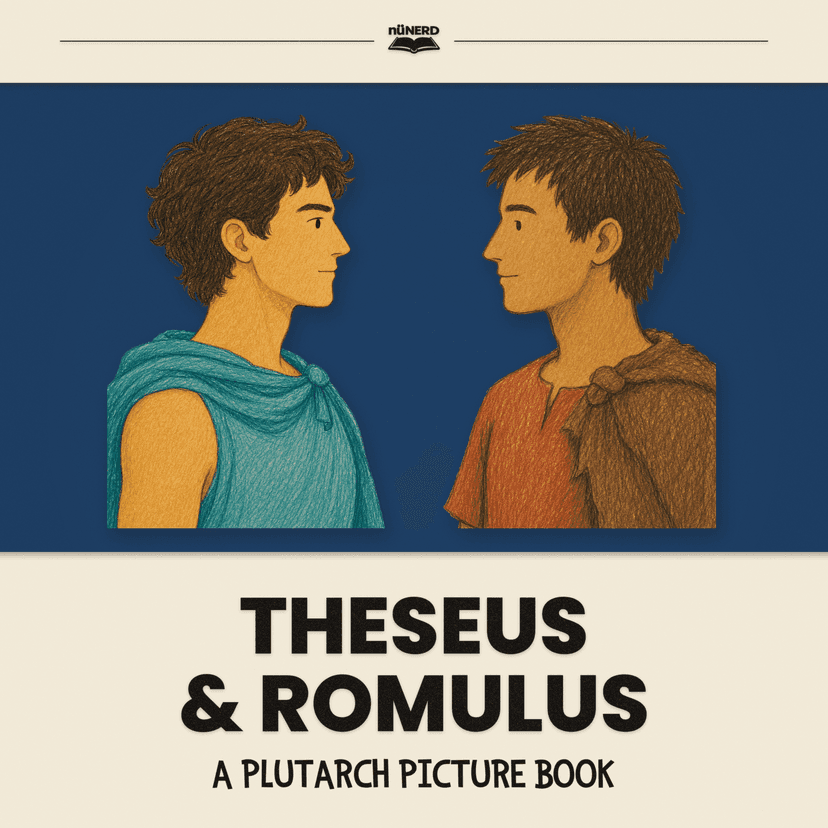
Ages 3–7 · Read WITH
A Plutarch Picture Book
Picture Book (8.5" × 8.5") · Full Color Soft Crayon
Theseus and Romulus grew up an ocean and a few centuries apart, and each did the same astonishing thing: took a crowd of separate, quarreling people and turned them into one great city. Setting the two side by side lets a young child feel the question underneath the swords and the monsters, that the hard part was never building the city, it was holding the people together.
Buy on Amazon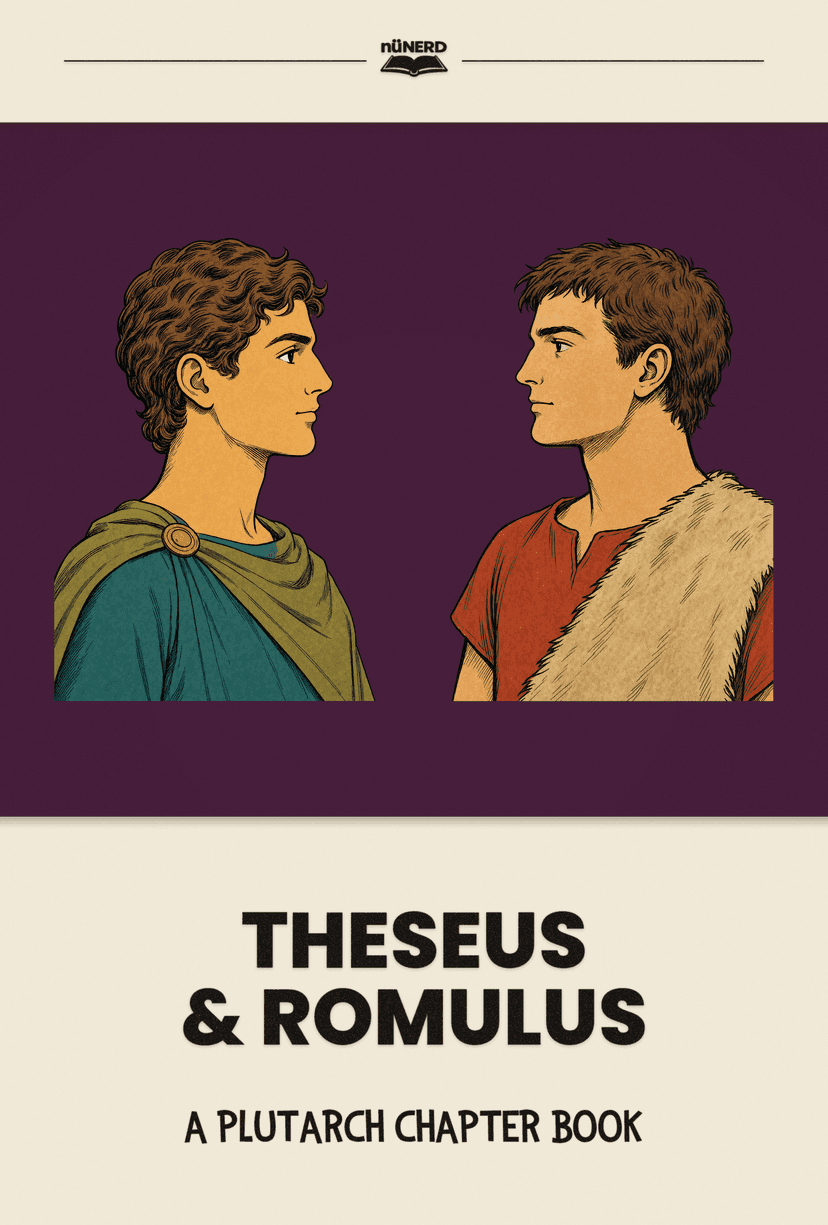
Ages 6–10 · Early Independent
A Plutarch Chapter Book
Chapter Book (6" × 9") · Black & White Illustrations
Both lives in full, the founder of Athens and the founder of Rome, including the falls the younger books leave out: the girl abandoned on the beach, the brother killed over a wall. Your child meets the hardest truth in either story, that greatness is not the same as goodness and every wrong leaves a debt, and learns to weigh a life instead of just cheering it. Vintage black-and-white illustrations throughout.
Buy on Amazon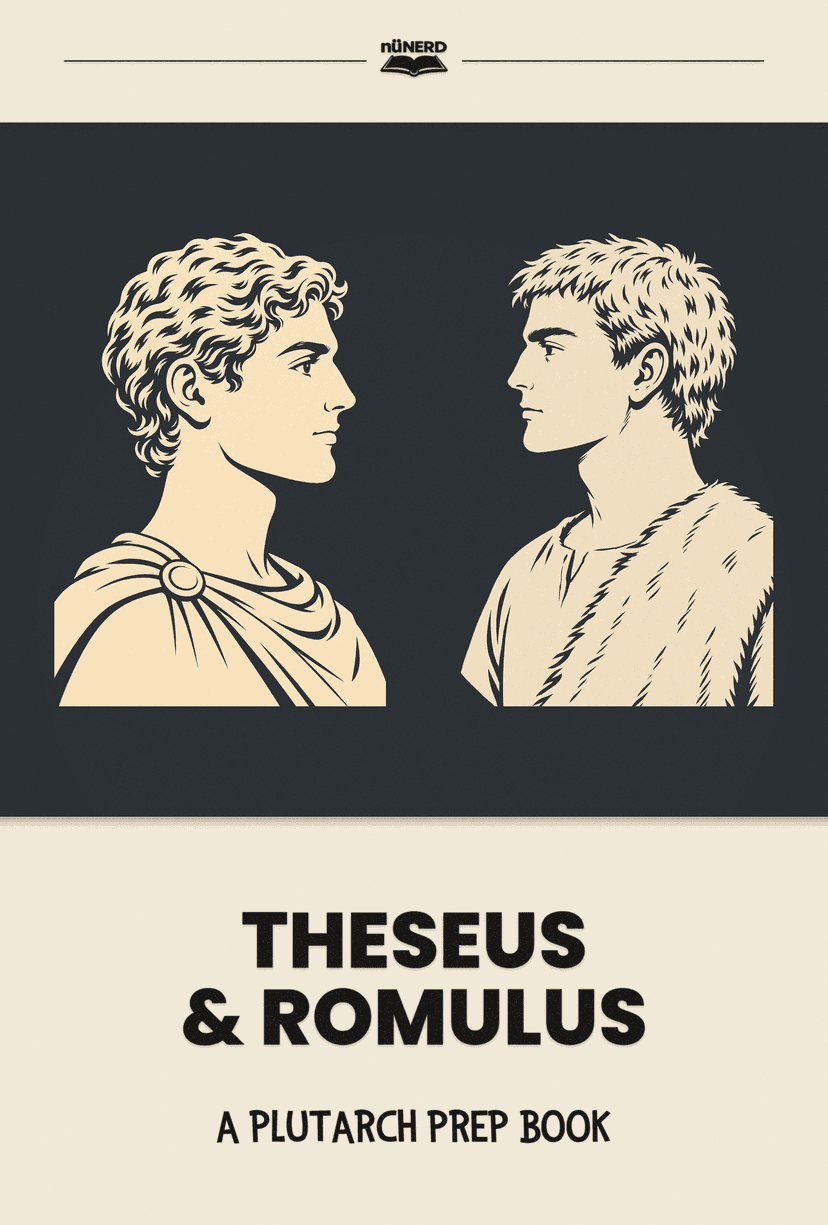
Ages 10–14 · Independent
A Plutarch Prep Book
Prep Book (6" × 9") · Black & White Woodcut
Plutarch ended each pair of lives with a verdict, but for four of his pairs that final chapter was lost, the famous Alexander and Caesar among them. For Theseus and Romulus, the pair that opens his Lives, it survived. The prep book teaches a ten- to fourteen-year-old to weigh two lives the way a historian does, handle sources that flatly disagree, and then do the bravest thing a reader of a great book can do: reach a verdict, open the master's own, and argue back where his calls do not hold up. It is also the fastest primer for a parent who wants to teach or discuss Plutarch: what the two lives cover, the questions the comparison turns on, and where Plutarch's own surviving verdict lands.
Buy on AmazonFree resources
Read Theseus & Romulus free
Our books are built to get kids ready for the real thing. When they are, here is the real thing, free: the public-domain text, a volunteer-read audiobook, and background worth a parent’s time.
Watch and explore
- Theseus, Hero of Athens (The Met)
How Theseus became the national hero of Athens, told through real Greek vases and sculpture you can click through.
Background for parents
- Theseus (World History Encyclopedia)
A clear, well-sourced overview, from the labyrinth and the Minotaur to his unification of Athens.
- Romulus and Remus (World History Encyclopedia)
The she-wolf, the twins, and the founding of Rome laid out plainly, with the differing ancient versions noted side by side.
Go deeper
- The Legend of Romulus (World History Encyclopedia)
A thoughtful essay on why Rome admired a founder whose story includes real wrongdoing, honest about the hard parts.
Read Plutarch free (this pair's two Lives)
- Plutarch, Life of Theseus (LacusCurtius)
The complete Life of the founder of Athens, the actual source behind the chapter and prep books, free to read in one sitting.
- Plutarch, Life of Romulus (LacusCurtius)
The founder of Rome, and at its end the surviving Comparison of the two, the very verdict the prep book teaches an older reader to weigh.
- Parallel Lives, Vol. 1 (LibriVox audiobook)
A free recording of Theseus, Romulus, and their Comparison, easy to play in the car or while cooking.
Read more
Why Plutarch Paired Theseus with Romulus
Plutarch opened his Parallel Lives with the two founders of Athens and Rome, because each did the same impossible thing: turned a crowd of quarreling strangers into a city. And unlike the famous Alexander and Caesar, this pair's verdict survived.
Read the post